Monday, February 24, 2020

February 26th is Grand Canyon National Park's Birthday


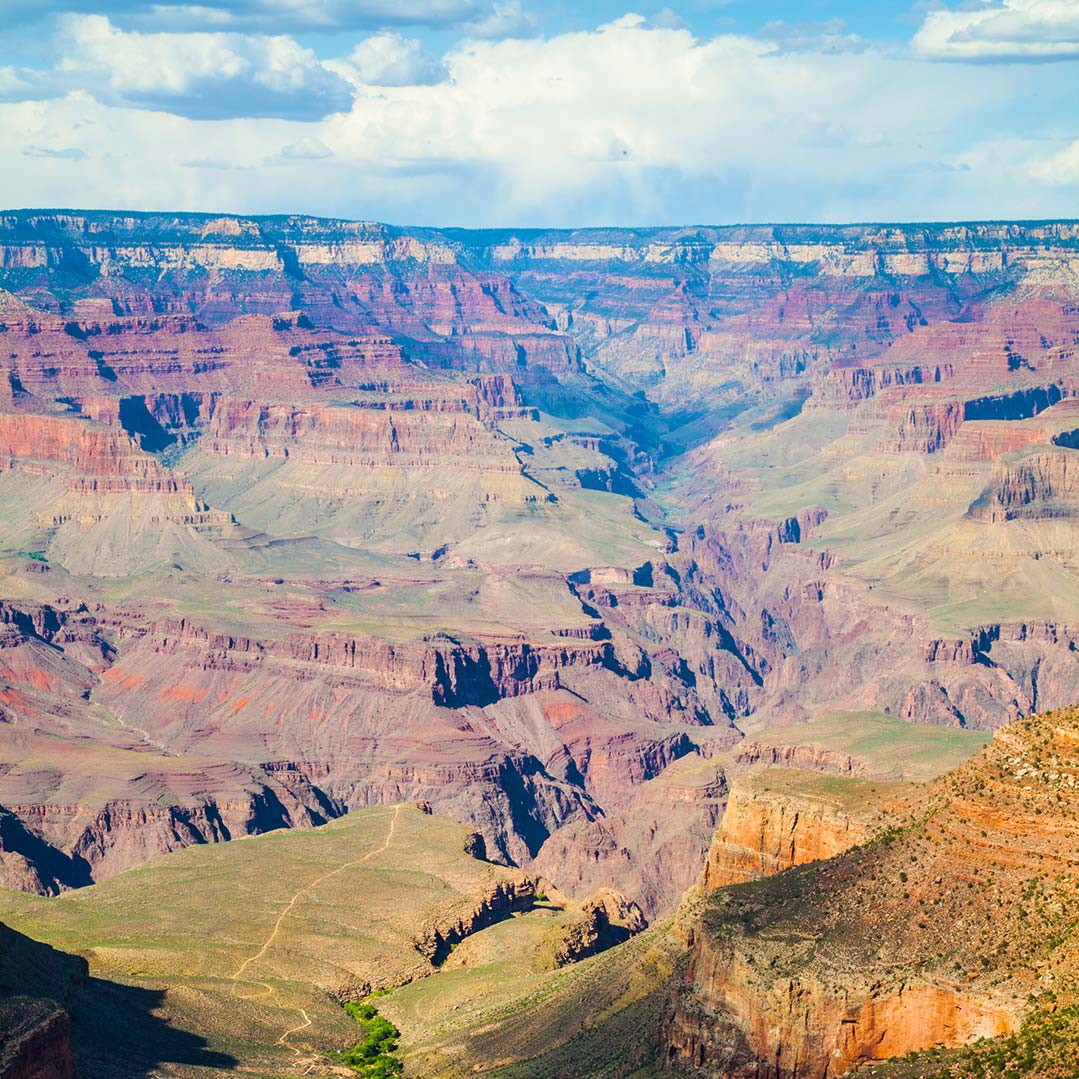
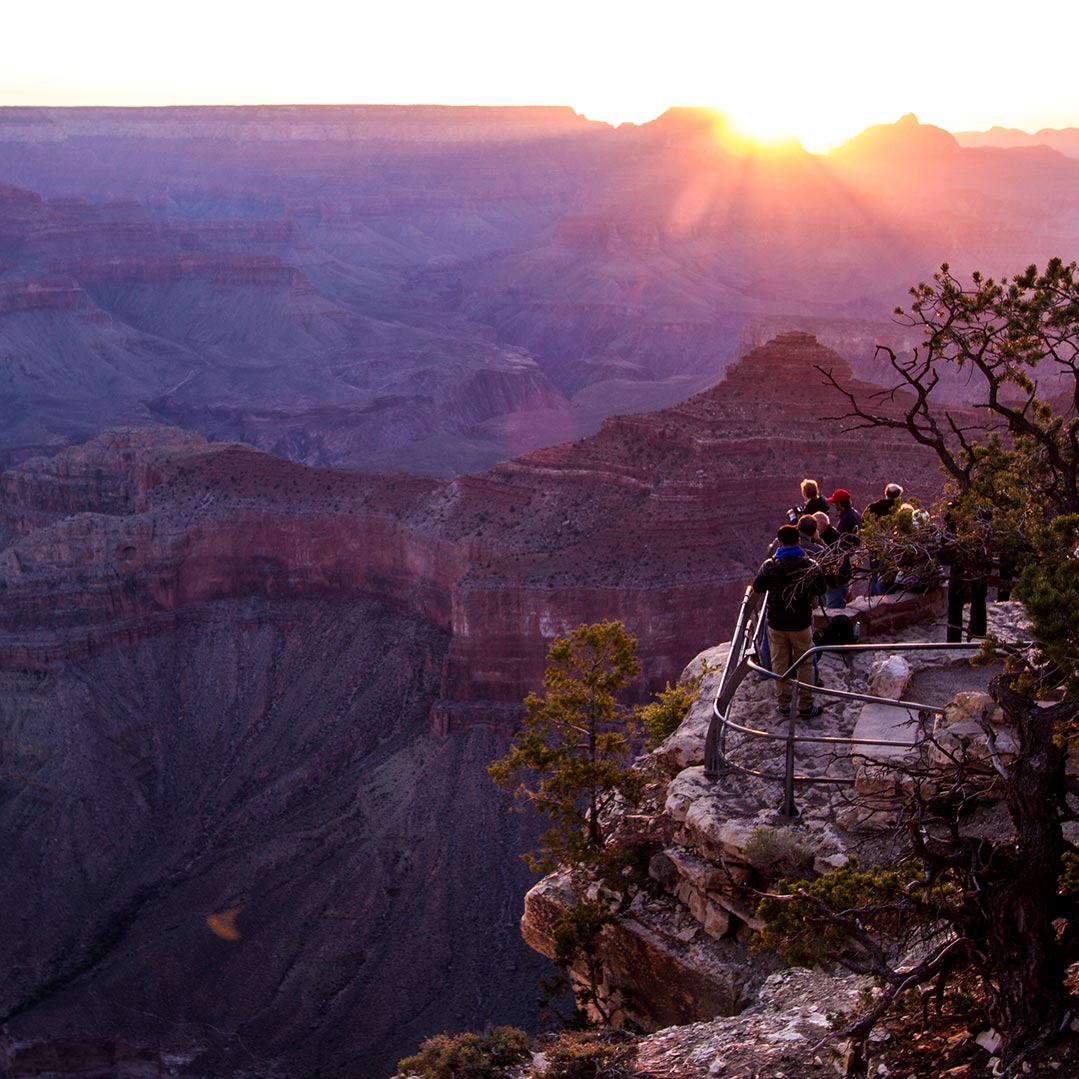
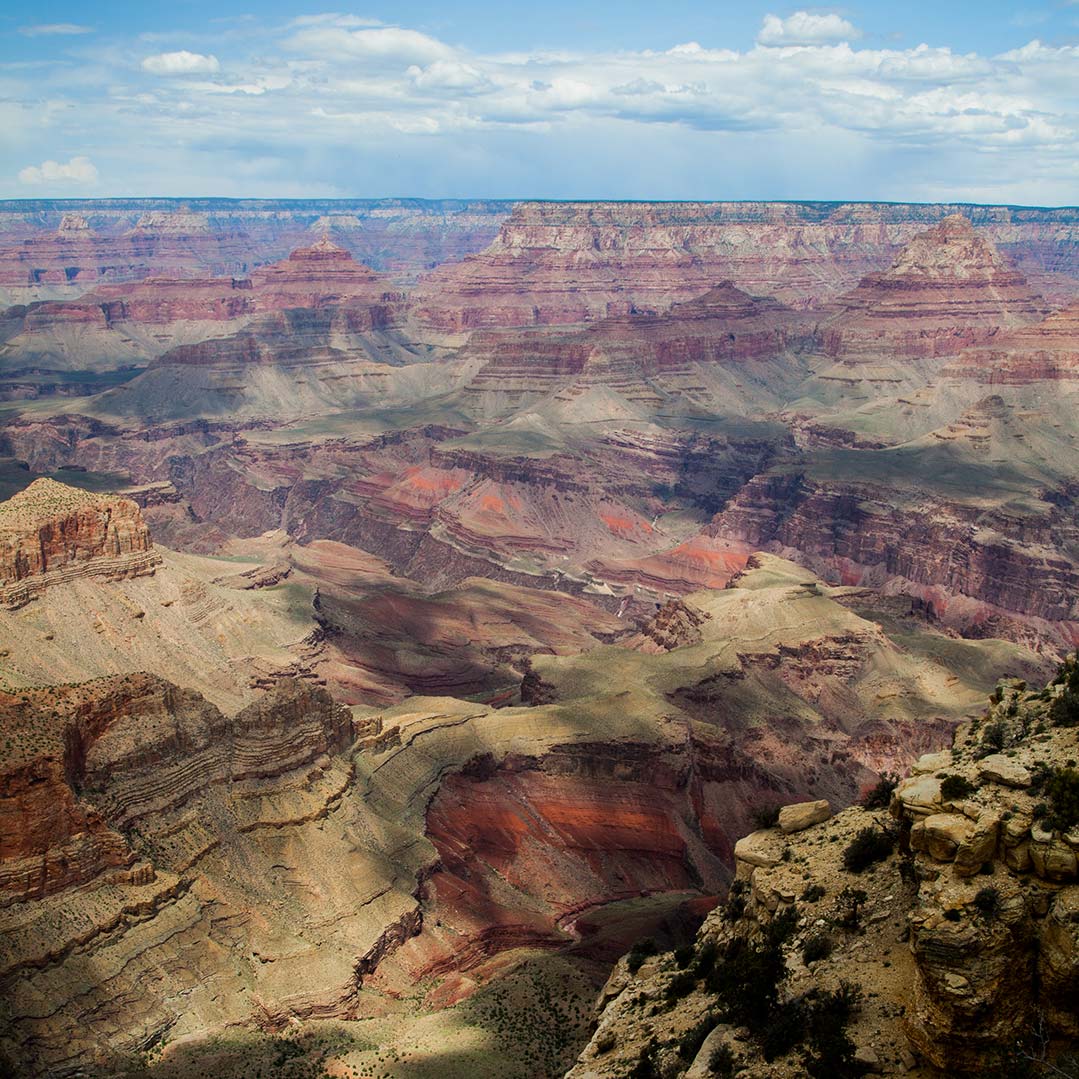
The Grand Canyon -- 277 miles long, and up to 18 miles wide reaches a depth of over a mile (6,093 feet) -- exposes nearly two billion years of Earth's geological history as the Colorado River and its tributaries cut their channels through layer after layer of rock while the Colorado Plateau was uplifted. The canyon is the result of erosion which exposes one of the most complete geologic columns on the planet and is often considered one of the Seven Natural Wonders of the World.


Grand Canyon, Sunrise | National Park Posters


The more recent Kaibab limestone caprock, on the rims of the Grand Canyon, formed 270 million years ago. In contrast, the oldest rocks within the Inner Gorge at the bottom of Grand Canyon date to 1.84 billion years ago. Geologists currently estimate the age of Earth at 4.5 billion years.


The Cambrian seas of the Grand Canyon were home to several kinds of trilobite, whose closest living relative is the modern horsehoe crab. They left their fossil record in the mud of the Bright Angel Shale over 500 million years ago.


Grand Canyon National Park | National Park Posters


Grand Canyon National Park was officially designated as a national park in 1919, though the landmark had been well known to Americans for over thirty years prior. In 1903, President Theodore Roosevelt visited the site and said: "The Grand Canyon fills me with awe. It is beyond comparison—beyond description; absolutely unparalleled through-out the wide world... Let this great wonder of nature remain as it now is. Do nothing to mar its grandeur, sublimity and loveliness. You cannot improve on it. But what you can do is to keep it for your children, your children's children, and all who come after you, as the one great sight which every American should see."


Grand Canyon, Bright Angel Trail | National Park Posters


The original photograph by Robert B. Decker for this Grand Canyon National Park poster was taken from the Kolb Studio, which was once the home and business of the Kolb brothers, pioneering photographers at Grand Canyon. The studio is located in the Village Historic District, at the Bright Angel Trailhead, where each year, thousands of hikers enter the Grand Canyon. They follow a route established by prehistoric people for two key reasons: water and access. Water emerges from springs at Indian Garden, and a fault creates a break in the cliffs, providing access.


Click here to see the Grand Canyon National Park poster.


Rob Decker is a photographer and graphic artist who studied under Ansel Adams in Yosemite National Park when he was just 19. Now he's on a journey to explore, photograph and create iconic WPA-style posters for each of our national parks.


Click here to learn more about Rob...


Source: https://national-park-posters.com/blogs/national-park-posters/february-26th-is-grand-canyon-national-parks-birthday

attachement

February 25th is Bryce Canyon's Birthday


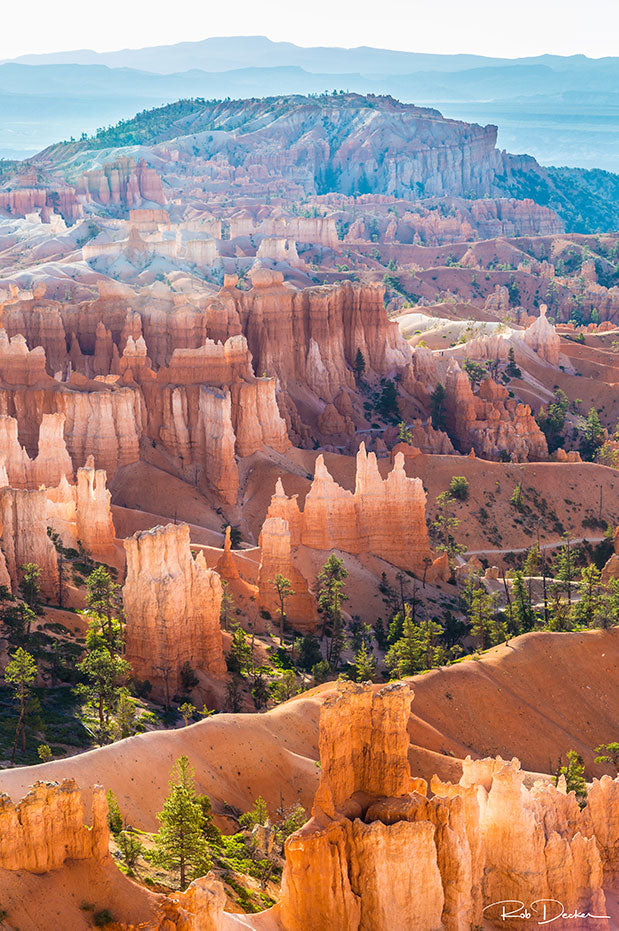
Hoodoos! Odd-shaped pillars of rock left standing from the forces of erosion -- are found on every continent, but Bryce Canyon boasts the largest collection of hoodoos in the world! Despite its name, the major feature of Bryce Canyon is a collection of giant natural amphitheaters along the eastern side of the Paunsaugunt Plateau in southwest Utah featuring thousands of Hoodoos, some up to 200 feet high. Formed by frost weathering and stream erosion, the red, orange, and white colors of the rocks provide spectacular views. In fact, on a clear day, the visibility at Bryce Canyon National Park often exceeds 100 miles! This is due to exceptional air quality, low humidity and high elevation.


Bristlecone Point, Bryce Canyon National Park | National Park Posters


The Bryce Canyon area was settled by Mormon pioneers in the 1850s and was named after Ebenezer Bryce, who homesteaded in the area in 1874. The area around Bryce Canyon became a National Monument in 1923 and was designated as a National Park in 1928. The park covers 35,835 acres but sees relatively few visitors compared to Zion National Park and the Grand Canyon, largely due to its remote location.


The park also has a 7.4 magnitude night sky, making it one of the darkest in North America. Stargazers can see 7,500 stars with the naked eye, while in most places fewer than 2,000 can be seen due to light pollution, and in many large cities only a few dozen can be seen.


Along with Bryce Canyon, Acadia, Gateway Arch, Grand Teton, Grand Canyon and Indiana Dunes celebrate their anniversaries in February.


Click here to see the Bryce Canyon National Park poster.


Rob Decker is a photographer and graphic artist who studied under Ansel Adams in Yosemite National Park when he was just 19. Now he's on a journey to explore, photograph and create WPA-style posters for each of our national parks.


Click here to learn more about the artist...


Source: https://national-park-posters.com/blogs/national-park-posters/february-25th-is-bryce-canyons-birthday

attachement

Sunday, February 23, 2020

Acadia National Park's Birthday is February 26th


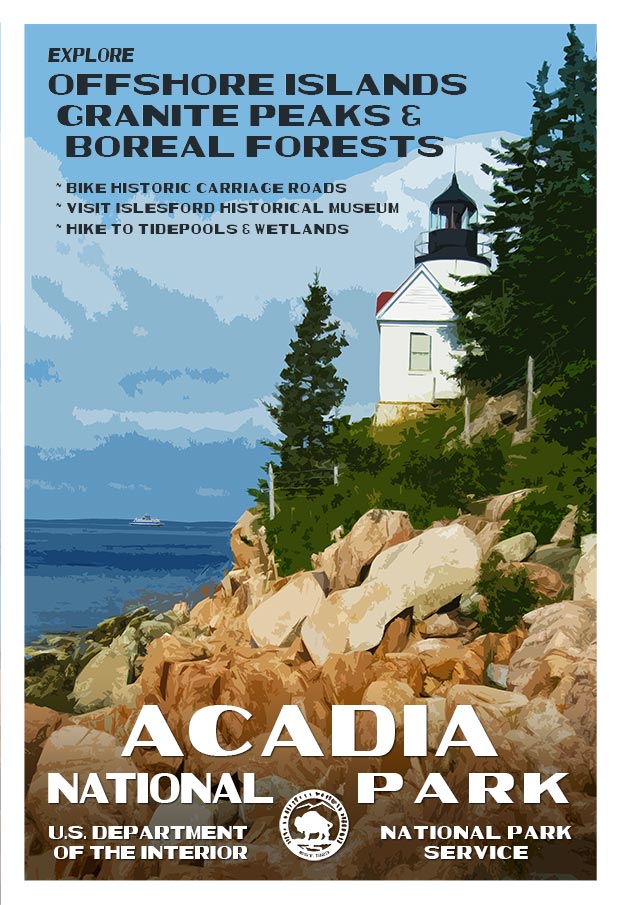
Throughout history, people have been drawn to the rugged coast of Maine. Awed by its beauty and diversity, early 20th-century visionaries donated the land that became Acadia National Park, which preserves much of Mount Desert Island, and associated smaller islands off the Atlantic coast.


Landscape architect Charles Eliot is credited with the idea for the park. George B. Dorr, called the "father of Acadia National Park," along with Eliot's father Charles W. Eliot (the president of Harvard), helped the park attain federal status when President Woodrow Wilson established it as Sieur de Monts National Monument on July 8, 1916. On February 26, 1919, it became a national park, with the name Lafayette National Park in honor of the Marquis de Lafayette, an influential French supporter of the American Revolution. The park's name was changed to Acadia National Park on January 19, 1929, in honor of the former French colony of Acadia which once included Maine.


Acadia is the oldest national park east of the Mississippi River and is home to the tallest mountain on the U.S. Atlantic coast. Visitors come to hike granite peaks, bike historic carriage roads, or relax and enjoy the scenery. The park contains more than 120 miles of historic hiking trails, many of which were established by local village improvement societies in the late 1800s and early 1900s. Today many of the historic features, such as stonework, are still visible. The historic carriage road system features 17 stone-faced bridges spanning streams, waterfalls, cliffs, and roadways.


Click here to learn more about Acadia National Park


Rob Decker is a photographer and graphic artist who had the rare privilege of studying under Ansel Adams in Yosemite National Park when he was just 19. Now, Rob is on a journey to explore, photograph and create iconic, WPA-style artwork for each of our national parks.


Click here to learn more about the artist...


Source: https://national-park-posters.com/blogs/national-park-posters/acadia-national-parks-birthday-is-february-26th-1

attachement

Saturday, February 22, 2020

Celebrate Grand Teton National Park's Birthday February 26th


Rising above a scene rich with extraordinary wildlife, pristine lakes, and alpine terrain, the Teton Range stands monument to the people who fought to protect it. These are mountains of the imagination. Mountains that led to the creation of Grand Teton National Park where you can explore over two hundred miles of trails, float the Snake River or enjoy the serenity of this remarkable place.


Monday, February 17, 2020

Celebrating the Life & Times of Ansel Adams


February 20th is Ansel Adams' Birthday...


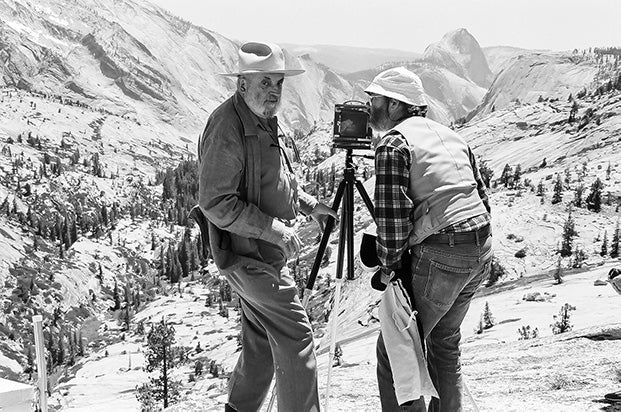
Many of you may know that I had the rare privilege to study under Ansel Adams in Yosemite National Park when I was just 19 years old. And as the years go by, I appreciate that experience more and more. I had been working with black and white film for a solid decade before I began working with Adam's Zone System, and I would spend another two decades continuing to work in black and white and hone my craft.


Photographing Yosemite with Ansel Adams


Photographing Yosemite National Park with Ansel Adams...sure wish I had thought about taking a selfie back in 1979!


Yosemite National Park is an amazing "classroom" and we spent time photographing the Valley, the Merced River, as well as up in the high country. But as much as the instruction, I remember some of the social time we had in the evenings, including cocktails with Ansel and his wife Virginia. I was 19 and they were in their late 70s and it was markedly clear that they were from a different era. Over the years, I've read most of what Ansel published, as well as what has been written about him. What an amazing life to have traveled this country -- and particularly to our National Parks, without dealing with the crowds and restrictions that are in place today.


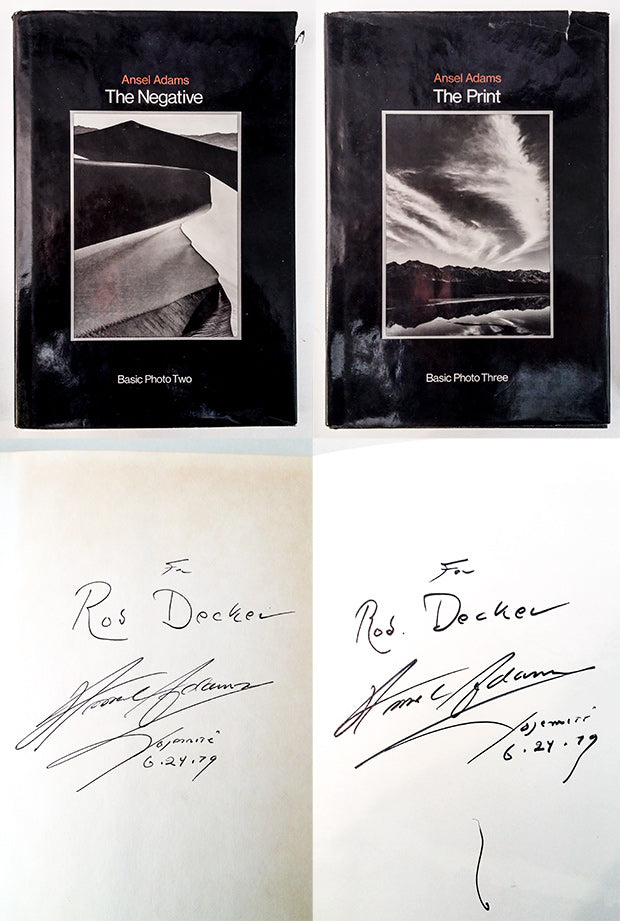
At 19, I was pretty awestruck in his presence. I remember scraping together the last bit of cash I had for the summer -- just enough to buy two of his books at the bookstore in Yosemite -- The Negative and The Print seemed like the obvious choices. And then, in a bit more brazened move, I asked him to autograph them! Honestly, to this day, I can't think of anything more cherished.


Ansel Adams Autographs for Rob Decker, National Park Posters


The National Park Poster Project have given me an opportunity share these incredible places -- many of which Ansel Adams visited and photographed -- with people from all over the world. And, I hope in some small way, helps to create the next generation of National Park supporters. It also provides me with a way to give back, and in the last year, I made financial contributions to the National Parks Conservation Association, the Conservancy for Cuyahoga Valley National Park, the Yosemite Conservancy, the Rocky Mountain Conservancy, the Western National Parks Association, Yellowstone Forever, Zion National Park Forever Project, the Grand Canyon Conservancy, and the Grand Teton Association. 


Ansel Adams, who in addition to being an amazing photographer -- was also an environmentalist who was realistic about development and the subsequent loss of habitat. Adams advocated for balanced growth, but was pained by the ravages of "progress". In his autobiography, he stated that, "We all know the tragedy of the dustbowls, the cruel unforgivable erosions of the soil, the depletion of fish or game, and the shrinking of the noble forests. And we know that such catastrophes shrivel the spirit of the people... The wilderness is pushed back, man is everywhere. Solitude, so vital to the individual man, is almost nowhere."


Ansel Adams first visited Yosemite National Park in 1916...it would be another 50 years before my first visit...the first of many. Today, it remains one of my most favorite National Parks, not just for the awe-inspiring beauty that is Yosemite, but also for the memories of camping with my family, backpacking the high country with friends, and of course, the summer of 1979 studying under one of the true masters!


Click here to see the Yosemite National Park poster!


Rob Decker is a photographer and graphic artist with a single passion for America's National Parks. Now he's on a journey to visit, photograph and create iconic WPA-style artwork for each of America's national parks. Click here to learn more about him. 


Source: https://national-park-posters.com/blogs/national-park-posters/celebrating-the-life-and-times-of-ansel-adams

attachement

Wednesday, February 12, 2020

Best Things to do at Indiana Dunes National Park


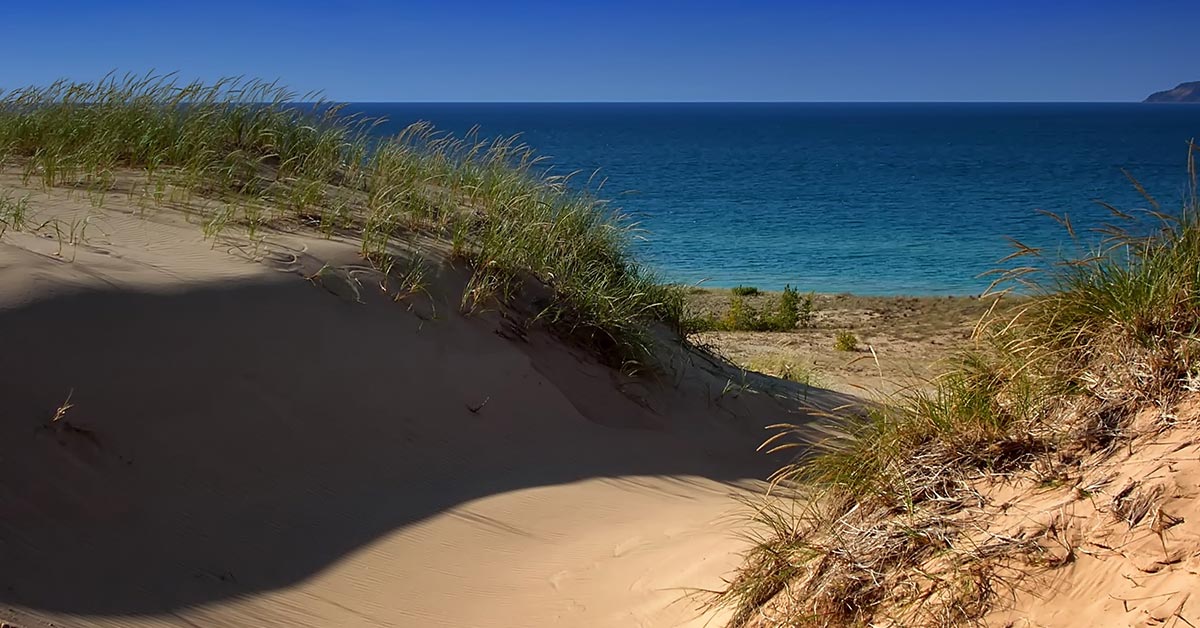
Indiana Dunes National Park hugs 15 miles of the southern shore of Lake Michigan and has much to offer. Whether you enjoy scouting for rare species of birds or flying kites on the sandy beach, the national park's 15,000 acres will continually enchant you.  Hikers will enjoy 50 miles of trails over rugged dunes, mysterious wetlands, sunny prairies, meandering rivers and peaceful forests.


Dunes, Indiana Dunes National Park


Winter Activities


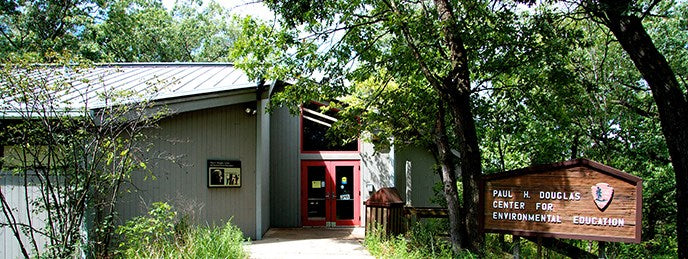
Hiking, cross-country skiing and snowshoeing are popular in the wintertime. If you need snowshoes or cross-country skis, free rentals are available at the Paul H. Douglas Center for Environmental Education for use on the Paul H. Douglas Trail, weather permitting. The best areas to bring your own cross-country skiing or snowshoe equipment include the Glenwood Dunes Trail System and the Tolleston Dunes Trail System.


Paul H. Douglas Center for Environmental Education


Beaches and Swimming


Fifteen miles of sandy beach along the southern shore of Lake Michigan offer a wide variety of recreational activities. Whether it's enjoying a summer sunset stroll or marveling at the arctic beauty of Lake Michigan's shelf ice, you can enjoy the beach in all seasons.


There are several beach parking lots along the Indiana Dunes National Park. All beaches and parking lots are open daily from 6:00 am to 11:00 pm and have potable water and restrooms. Additionally, West Beach has showers and lifeguards from the Friday of Memorial Day weekend through the Monday of Labor Day weekend.


Biking


Discover much more than just sand dunes as you bike on an interconnected trail system that spans 37 miles across the entire length of the national park. A wide variety of trails traverse the various habitats and cultural history of Indiana Dunes National Park. The varying lengths make it easy to choose the trail that's right for you. From a short easy ride to a challenging all-day trek, most of the trails are open all year and the experience will change with each season.


Bird Watching


Located at the southern tip of Lake Michigan, the national park is an important feeding and resting area for migrating birds. Lake Michigan influences the migration patterns of bird species. During the fall migration, southbound birds follow the north-south shoreline and are funneled into the Indiana Dunes. The large expanse of open water and miles of shoreline also attract large numbers of wintering birds.


Bird Watching, Indiana Dunes National Park


Indiana Dunes National Park provides an excellent opportunity for birders to see a variety of bird species. Birders can observe hawks during migration from the top of a sand dune, watch waterfowl with a spotting scope from the shoreline, or look for wetland birds in remnant sections of the Great Marsh. Whether you have beginner or advanced identification skills, Indiana Dunes National Park is a great place for birders.


The national park plays an important role in the annual Indiana Dunes Birding Festival, which takes place the third weekend in May. This incredible four-day event showcases dozens of birding spots around the region with expert led outings.


Fishing & Boating


Fishing


Fishing is allowed under federal, state and local laws. You need an Indiana Fishing License and a stamp if fishing for trout and salmon. Watch for drop-offs in creeks and along beaches.


Sailing & Power-boating


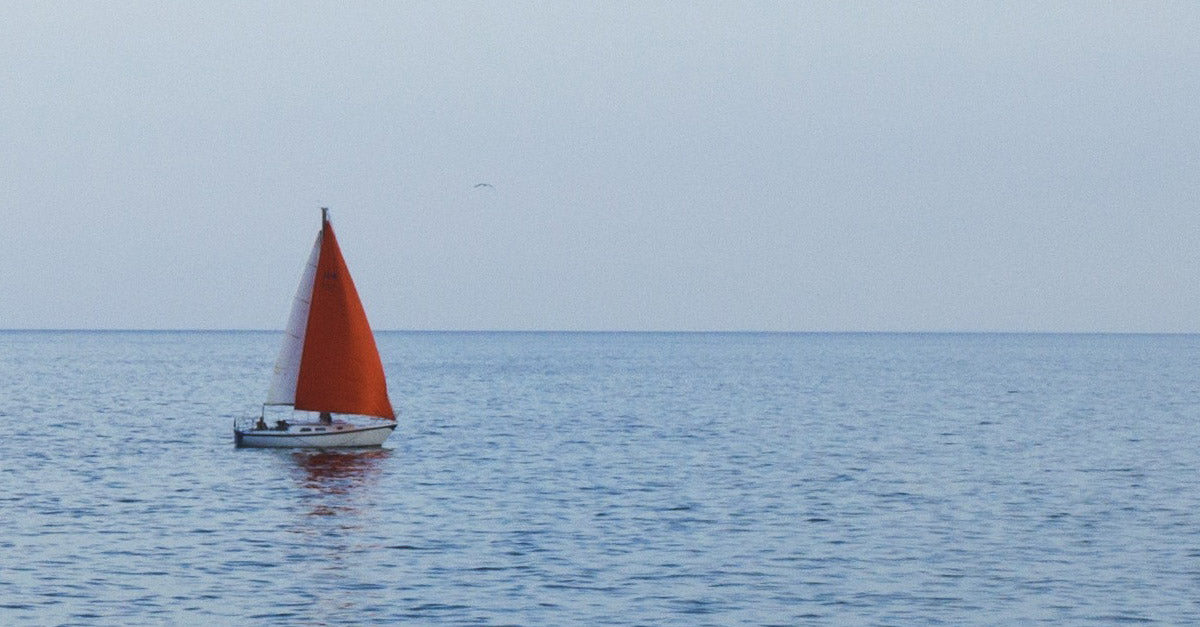
Sailing, Indiana Dunes National Park


Sailing and power-boating are popular on Lake Michigan. There are no marinas, boat rentals or boat launches within the national park. There are services available through commercial and city facilities in Porter, Lake and LaPorte counties. Check these county tourism links for information.


Kayaking


Kayaking, Indiana Dunes National Park


Kayaking is increasingly popular on Lake Michigan since the inception of the Lake Michigan Water Trail and in area waterways like the Little Calumet River and Burns Waterway. Launching hand-carried, non-motorized boats from any Indiana Dunes National Park beach is permitted with the exception West Beach's lifeguarded swimming area (Friday of Memorial Day weekend through the Monday of Labor Day weekend). Lake Michigan's water conditions can quickly change from calm to dangerous, so check the weather forecast and always use a certified personal flotation device.


Canoeing


Canoeing is also popular on the region's rivers and waterways, but is generally not recommended for Lake Michigan due to frequent windy conditions and large waves. Canoeing is popular on the Little Calumet River.


Hiking


Discover much more than just sand dunes as you hike through 14 distinct trail systems covering more than 50 miles of trails. A wide variety of hiking trails traverse the various habitats and cultural history of Indiana Dunes National Park. The varying lengths and difficulty levels make it easy to choose the trail that's right for you. From a short easy stroll to a challenging all-day trek, most of the trails are open all year and the hiking experience will change with each season.


Indiana Dunes Outdoor Adventure Festival


Outdoor Adventure FEstival


Spend the weekend outdoors at the Indiana Dunes Outdoor Adventure Festival, which will take place Friday-Sunday, October 2-4, 2020, throughout the Indiana Dunes region. Packed with outdoor adventure opportunities, the festival will bring together over 70 events in one weekend. With support from Friends of Indian Dunes, Indiana Dunes State Park, Indiana Dunes Tourism, and more than dozen other partners, the Indiana Dunes National Park will host this three-day event.


Click here to see the Indiana Dunes National Park poster.


Rob Decker is a photographer and graphic artist who had the rare privilege of studying under Ansel Adams in Yosemite National Park when he was just 19 years old. Now, Rob is on a journey to explore and photograph all 61 of America's National Parks. He's creating WPA-style posters to help people celebrate their own national park adventures -- as well as encourage others to get out and explore!


Source: https://national-park-posters.com/blogs/national-park-posters/best-things-to-do-at-indiana-dunes-national-park

attachement

Tuesday, February 11, 2020

Bandelier National Monument


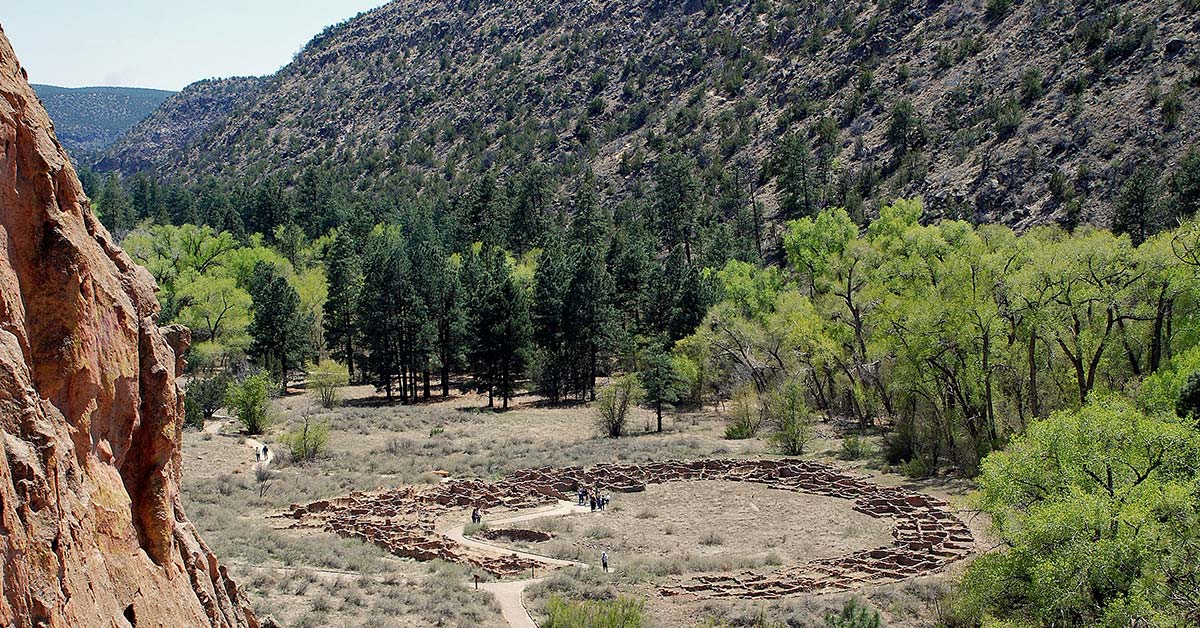
Bandelier National Monument, near Los Alamos, New Mexico, protects Ancestral Pueblo archeological sites, a diverse and scenic landscape, and the country's largest National Park Service Civilian Conservation Corps National Landmark District.


Bandelier was designated by President Woodrow Wilson as a National Monument on February 11, 1916, -- named for Adolph Bandelier -- a Swiss-American anthropologist who researched the cultures of the area and supported preservation of the sites.


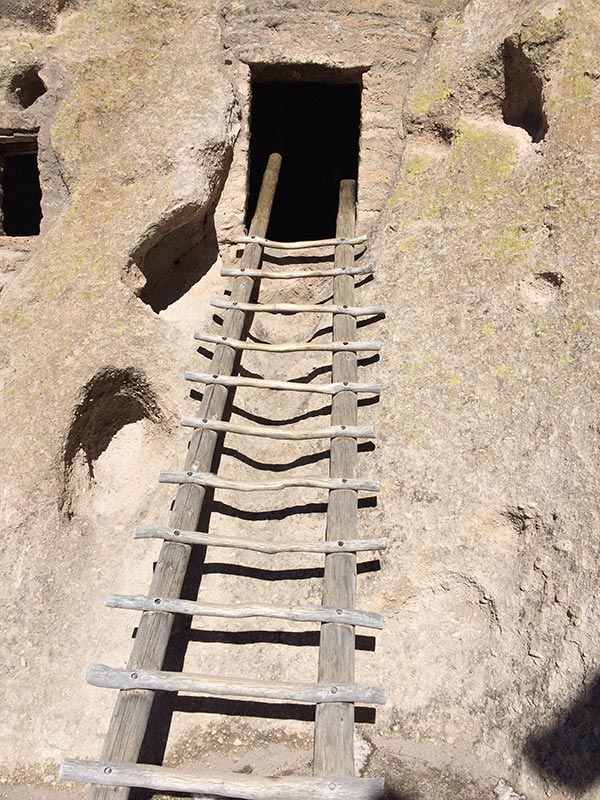
Bandelier National Monument protects over 33,000 acres of rugged but beautiful canyon and mesa country as well as evidence of a human presence going back over 11,000 years.  Petroglyphs, dwellings carved into the soft rock cliffs, and standing masonry walls pay tribute to the early days of a culture that still survives in the surrounding communities.


Bandelier National Monument


The Ancestral Pueblo people lived here from approximately 1150 CE to 1550 CE. They built homes carved from the volcanic tuff and planted crops in mesatop fields. Corn, beans, and squash were central to their diet, supplemented by native plants and meat from deer, rabbit, and squirrel. Domesticated turkeys were used for both their feathers and meat while dogs assisted in hunting and provided companionship.


Bandelier National Monument


Over 70% of the Monument is wilderness, with over one mile elevation change, from about 5,000 feet along the Rio Grande to over 10,000 feet at the peak of Cerro Grande on the rim of the Valles Caldera, providing for a wide range of life zones and wildlife habitats. There are three miles of road, and more than 70 miles of hiking trails.


The park infrastructure was developed in the 1930s by crews of the Civilian Conservation Corps and is a National Historic Landmark for its well-preserved architecture. The National Park Service cooperates with surrounding Pueblos, other federal agencies, and state agencies to manage the park.


Learn how you can get this limited edition, WPA-style print.


Source: https://national-park-posters.com/blogs/national-park-posters/bandelier-national-monument

attachement

Tuesday, February 4, 2020

Canyonlands National Park


At Canyonlands National Park you can explore a wilderness of countless canyons and fantastically formed buttes carved by the Colorado River and its tributaries. Rivers divide the park into four districts: Island in the Sky, The Needles, The Maze, and the rivers themselves. These areas share a primitive desert atmosphere, but each offers different opportunities for sightseeing and adventure.


Soda Springs Basin, Canyonlands National Park


A must-see is the sunrise over the towering depths of the canyons or perhaps at the famed Mesa Arch at Canyonlands National Park. Here you can explore a wilderness of countless canyons and fantastically formed buttes carved by the Colorado River and its tributaries. Rivers divide the park into four districts: Island in the Sky, The Needles, The Maze, and the rivers themselves. These areas share a primitive desert atmosphere, but each offers different opportunities for sightseeing and adventure.


Canyonlands preserves the natural beauty and human history throughout its four districts, which are divided by the Green and Colorado rivers. While the districts share a primitive desert atmosphere, each retains its own character and offers different opportunities for exploration and adventure. Author Edward Abbey, a frequent visitor, described the Canyonlands as "the most weird, wonderful, magical place on earth—there is nothing else like it anywhere."


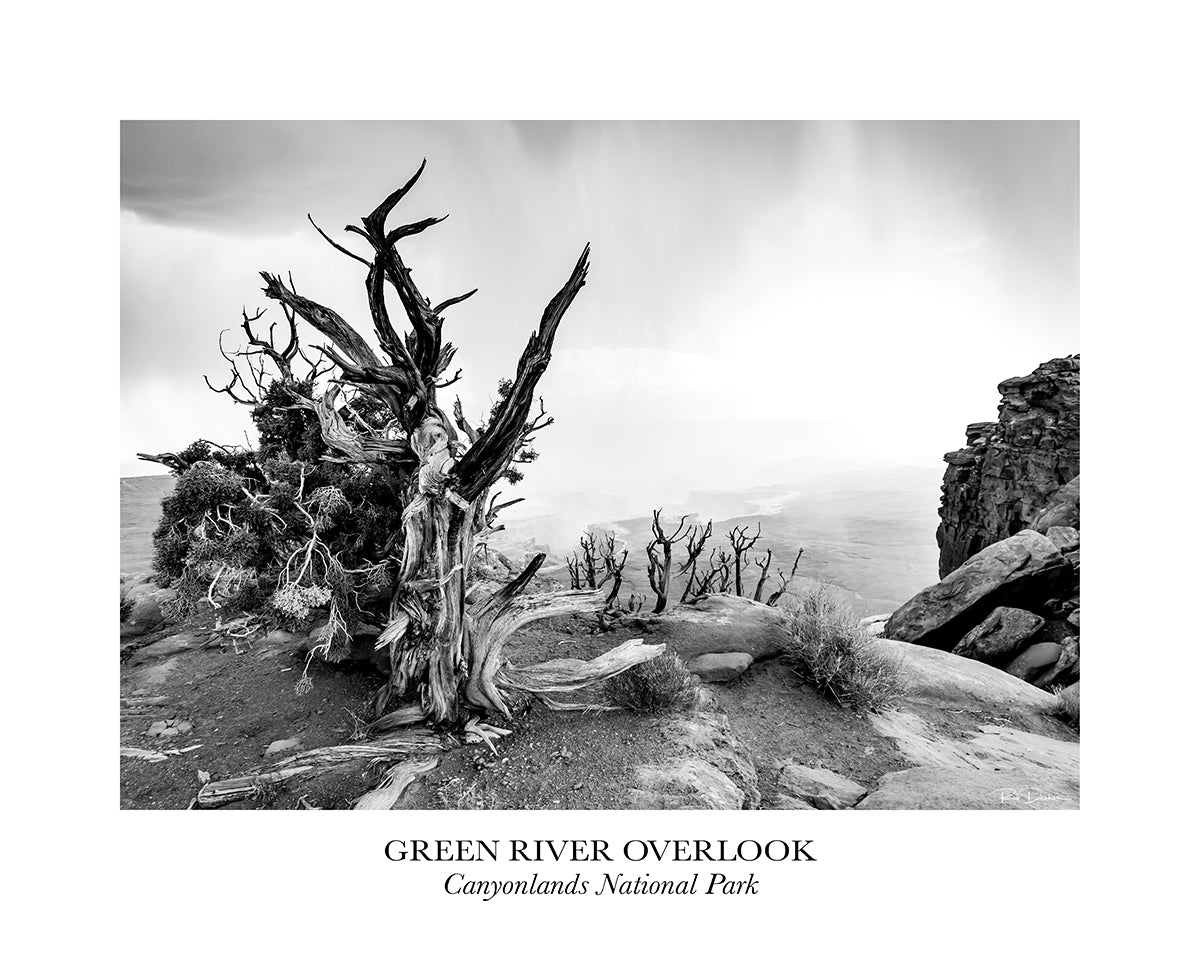
Green River Overlook, Canyonlands National Park


Though they appear close on a map, there are no roads that directly link the districts. Traveling between them requires two to six hours by car as there are few places to cross the rivers. Get directions. Most people find it impractical to visit more than one area in a single trip.


Canyonlands National Park preserves 337,598 acres of colorful canyons, mesas, buttes, fins, arches, and spires in the heart of southeast Utah's high desert. Water and gravity have been the prime architects of this land, sculpting layers of rock into the rugged landscape you see today.


Monument Basin, Canyonlands National Park


In the early 1950s, Bates Wilson, then superintendent of Arches National Monument, began exploring the area to the south and west of Moab, Utah. After seeing what is now known as the Needles District of Canyonlands National Park, Wilson began advocating for the establishment of a new national park that would include the Needles. Additional explorations by Wilson and others expanded the areas proposed for inclusion into the new national park to include the confluence of Green and Colorado rivers, the Maze District, and Horseshoe Canyon.


In 1961, Secretary of the Interior Stewart Udall was scheduled to address a conference at Grand Canyon National Park. On his flight to the conference, he flew over the Confluence (where the Colorado and Green rivers meet). The view apparently sparked Udall's interest in Wilson's proposal for a new national park in that area and Udall began promoting the establishment of Canyonlands National Park.


In September 1964, after several years of debate, President Lyndon B. Johnson established Canyonlands as a new national park. Bates Wilson became the first superintendent of the new park. He is often referred to as the "Father of Canyonlands."


Click Here to See the Canyonlands National Park Poster!


Rob Decker is a photographer and graphic artist who studied under Ansel Adams in Yosemite National Park when he was just 19 years old. Now, he's creating iconic WPA-style posters for each of our National Parks. Click Here to learn more about his story and The National Park Poster Project.


Source: https://national-park-posters.com/blogs/national-park-posters/canyonlands-national-park

attachement

Thursday, January 30, 2020

The Valentine's Day Gift Guide


Looking for a Unique Valentines Day Gift? Here are Some Great Ideas for Your Sweetheart!


National Park Posters


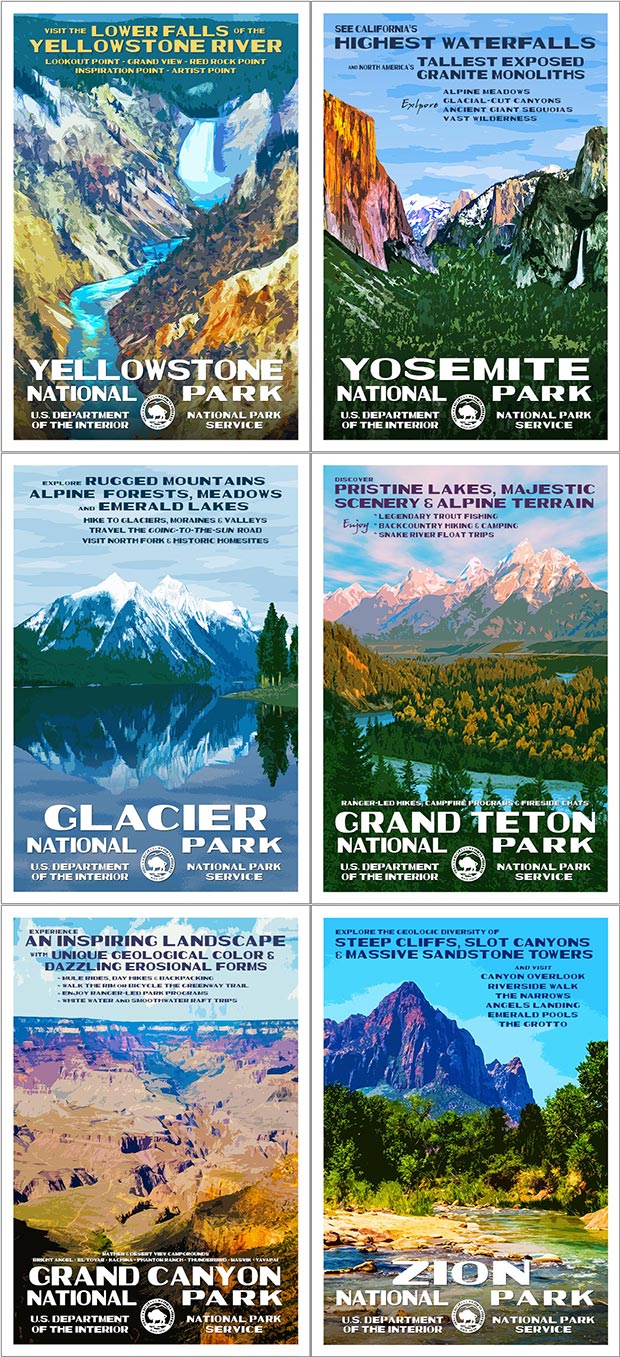
WPA-Style Posters of Your Favorite National Park. Inspired by the iconic WPA artwork of the 1930s and 40s, our National Park posters are designed to celebrate our American heritage. Each numbered, signed and dated poster is printed on “Conservation,” a 100% recycled stock with soy based inks. From start to finish, these posters are 100% American Made! Posters are 13" x 19".


$40.00    Click Here to See the Posters


Artist Proofs


Grand Teton National Park Artist Proof


These Limited Edition prints are in High Demand! Artist Proofs are the first 25 posters pulled from each print run, are numbered 1-25, and are dated and signed. They feature the color bars used by the pressman to make sure registration and colors stay consistent throughout the print run and are 13" x 20". My signature attests that I have personally inspected and approved each print — and further verified that no unsigned or unnumbered copies within the limited edition are known to exist.


$55.00    Click Here to See the Artist Proofs


Collections


Artist Pick Collection | National Park Posters


From the original Kickstarter Collection -- to the State, Regional and Annual Collections, you can select from 2 - 12 of your favorite posters and get deep discounts! These collections make the perfect holiday gift for the national park lover on your list! They are the perfect way to bring their favorite National Parks into their home or office. All posters are numbered, signed and dated.


$60.00 - $255.00    Click Here to See all the Collections


Worth Protecting Stickers


Worth Protecting Sticker


The Worth Protecting sticker is 3″ x 4″ and printed on white polypropylene with a UV laminate. The sticker is based off of the ever-so-popular “Worth Protecting” poster, created in the style of the Works Progress Administration (WPA). Stickers can be slapped on outdoor gear, vehicles and more so you can voice your desire to protect America's National Parks. For indoor or outdoor use!


$5.95    Click Here to See the Worth Protecting Stickers


Postcards 


National Park Postcards


Limited on wall space? Postcards are the perfect solution. Just find a frame for 4" x 6" photo prints, and you can make a custom display of your favorite parks! Postcards are also great for sending to friends, use in PostCrossings, Save the Date or other announcements!


$18.00     Click Here to See the Postcards


America's National Parks Map


The ultimate bucket list! A great way to mark off the national parks you've already visited, or those you dream about seeing! This 19" x 13" map features all 61 of America's National Parks!


$30.00    Click Here to See the Map


Gift Cards - It Might Be the Perfect Valentines Day Gift


Get them a gift they'll love by letting them pick their favorite National Park Poster, Artist Proof, Collection, Postcard Set or Stickers.


Available in a wide range of denominations!


$25.00 and Up    Click Here to Get a Gift Card


Source: https://national-park-posters.com/blogs/national-park-posters/the-valentines-day-gift-guide

attachement

Monday, January 27, 2020

Best Things To Do In Rocky Mountain National Park


Rocky Mountain National Park's 415 square miles encompass and protect some of the world's most spectacular mountain environments. Trail Ridge Road – which crests at over 12,000 feet offers awe-inspiring overlooks to see these subalpine and alpine worlds. With more than 350 miles of hiking trails, and wildflowers, wildlife, and starry nights -- in a world of superlatives, Rocky is on top!


My name is Rob Decker and I'm a photographer and national park enthusiast. In fact, I've been to more than 50 of our amazing national parks. Rocky Mountain National Park is literally in my backyard, and I have explored almost every area of the park — so I'm ready to help! Whether this is your first time to Rocky Mountain, or if you are returning after many years and would like to be re-introduced to the park — this list of the best things to do is just for you!


Hiking
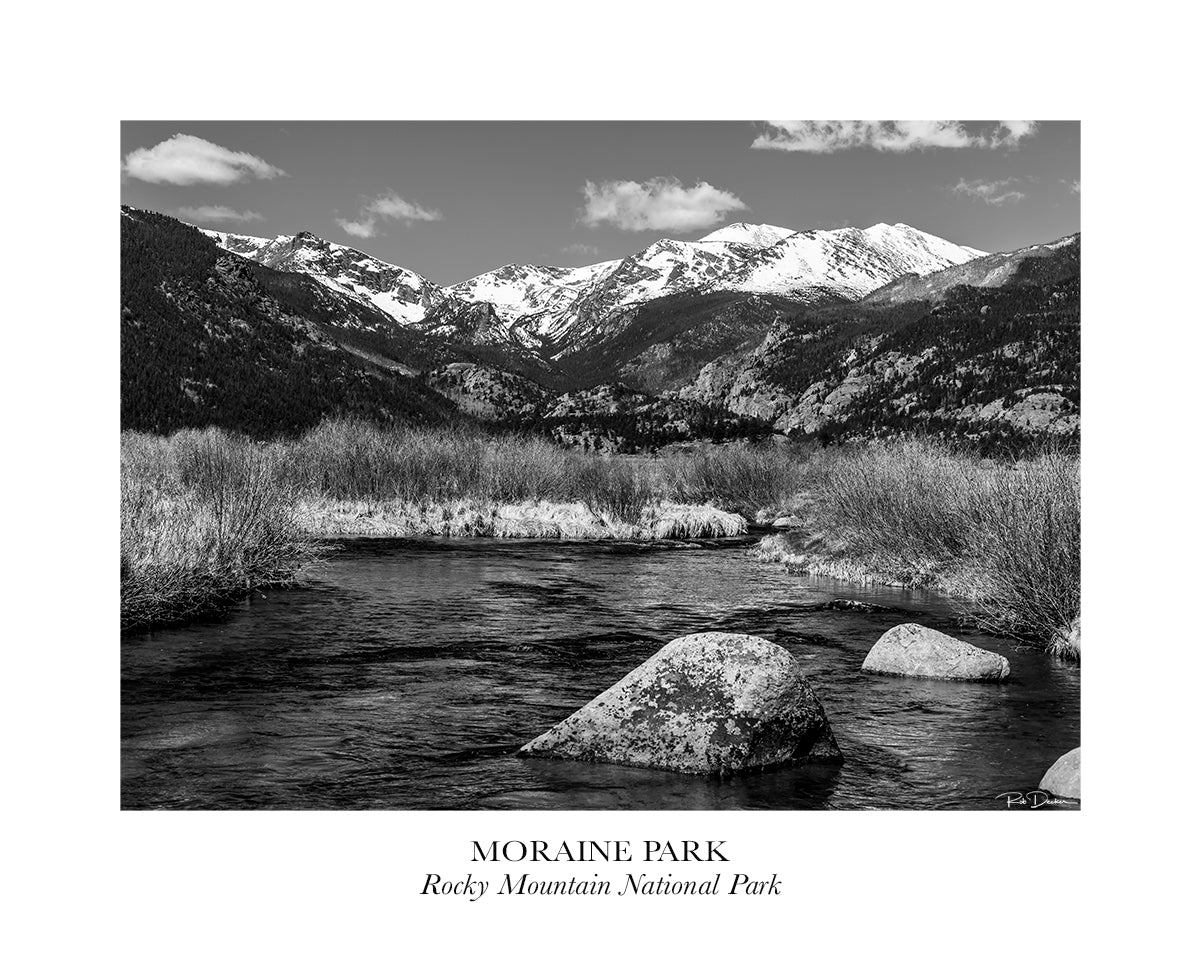

Moraine Park, Rocky Mountain National Park


Rocky Mountain National Park has 355 miles of hiking trails. They range from flat lakeside strolls to steep mountain peak climbs. If you are new to the park, consult with rangers at the visitor centers. They can provide advice about trails which are appropriate to different fitness and experience levels. As you plan your hike, keep in mind that park elevations range from 7,500 to over 12,000 feet. Even very fit individuals coming from lower elevations may experience altitude problems. Symptoms include headaches, shortness of breath, insomnia and rapid heartbeat. To minimize symptoms drink plenty of fluids, avoid alcohol, don't skip meals and get plenty of rest. 


Fishing
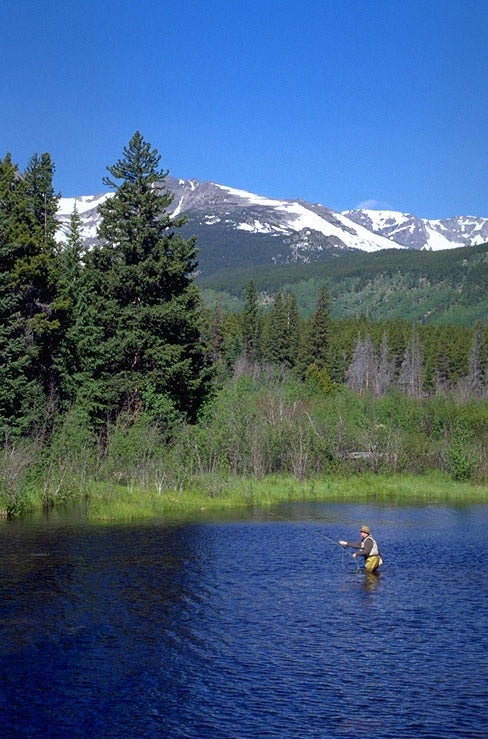

Fishing Lily Lake, Rocky Mountain National Park


Sport fishing is permitted in Rocky Mountain National Park. Fishing activities are balanced with efforts to restore and perpetuate natural aquatic environments and life. Fishing was popular with early settlers and visitors in the Rocky Mountains. In an attempt to improve the sport, many streams and lakes were stocked with non-native species of trout. The National Park Service stocked non-native Yellowstone cutthroat trout as late as 1969. The only trout native to the park are the greenback cutthroat and the Colorado River cutthroat. These efforts to enhance recreational opportunities in National Park areas were reconsidered in the 1970s. Since 1975, native greenback cutthroat and Colorado River cutthroat trout are being restored to park waters and exotic or non-native fish are being removed.


Wildlife Viewing


Rocky Mountain National Park visitors have a passion for viewing wild animals, especially the big ones. With an elk herd numbering between 600 to 800 in the winter, about 350 bighorn sheep, numerous mule deer and a small population of moose calling the park home, it's no surprise that wildlife watching is rated the number-one activity by a vast majority of Rocky's three million annual visitors.
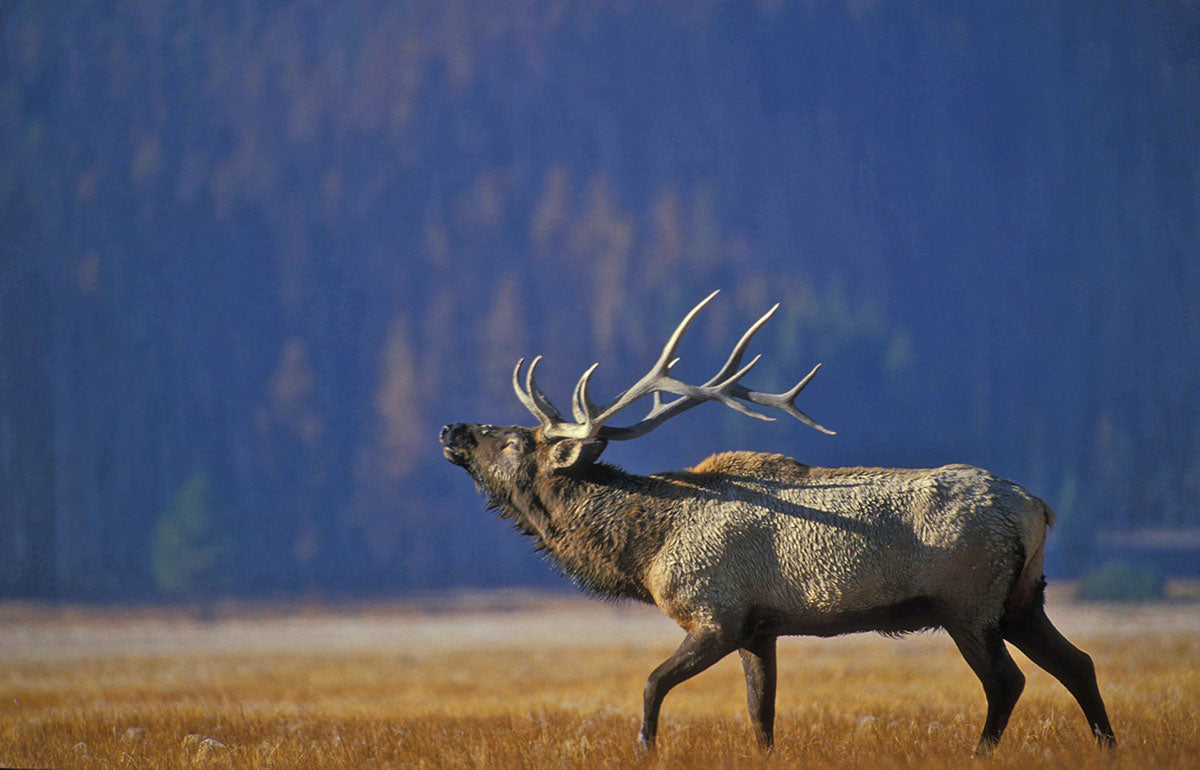

Elk Bugling, Rocky Mountain National Park


Wildlife Viewing Tips


The park's great large-animal population makes it one of the country's top wildlife watching destinations. Here are a few park favorites:

  • Elk can be seen anytime, a popular viewing period being the fall rut, or mating season. Look for elk in meadows and where meadow and forest meet.

  • Bighorn sheep are commonly seen at Sheep Lakes from May through mid-August.

  • Moose frequent willow thickets along the Colorado River in the Kawuneeche Valley on the park's west side.

  • Otters were reintroduced into the Colorado River area and are doing fairly well. These animals are difficult to spot.

  • Mule deer are common and can be seen anywhere. They are most often found at lower elevations in open areas.

  • Bats feed over lakes and ponds at dawn and dusk.

  • Marmots and pikas favor rocky areas. Marmots are best seen on the alpine tundra along Trail Ridge Road. Pikas - small, light-colored mammals - are common in rock piles. Listen for their sharp, distinctive bark and watch for movement.

  • Clark's nutcrackers, Steller's jays, golden eagles and prairie falcons can be seen along Trail Ridge Road.

  • White-tailed ptarmigans, some of the most sought-after birds in Rocky Mountain National Park, are common but difficult to spot. For best results, hike on the tundra and look carefully. Ptarmigans usually remain still, relying on their natural camouflage for protection.

  • American dippers, or water ouzels, can be found along most streams. Listen for their loud call, similar to the rapid clicking of two stones together, as they fly up and down their territories.
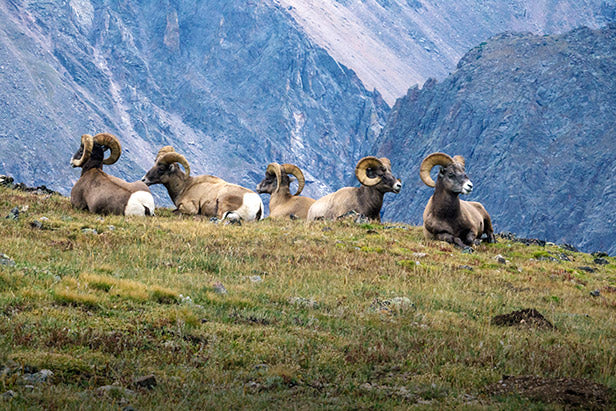

Big Horn Sheep, Rocky Mountain National Park


Despite their good intentions, some wildlife watchers are loving park animals to death. Feeding junk food to wildlife reduces its ability to survive the long mountain winter. When they panhandle near roadsides, animals fall easy prey to automobiles. As they become habituated to humans and lose their natural fear, the animals become aggressive and may be destroyed. Harassing or feeding wildlife is illegal in all national parks.


Horseback Riding
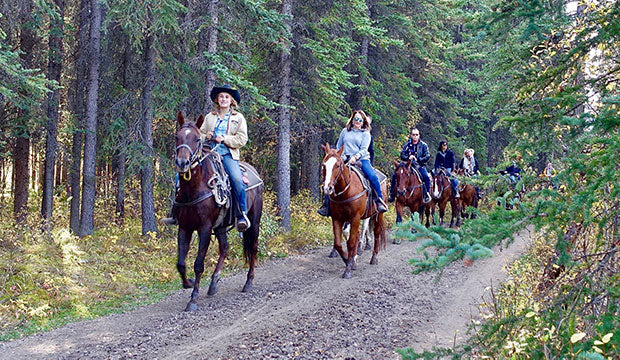

Horseback Riding, Rocky Mountain National Park


Horses have been part of Rocky Mountain Park's tradition since its designation in 1915. Recreational pack animal use is balanced with other recreational uses such as hiking. Packing is managed to maintain the natural resources and unique ecosystems in the park. Horses, mules, ponies, llamas, and burros are allowed on park trails. No goats are allowed on park trails. For overnight camping, stock is permitted at established backcountry campsites designated for stock use. There are two stables located within the park: Glacier Creek Stables and Moraine Park Stables. There are many stables outside the park. Find contact information for the various stables in the area. There are two Estes Park stables open in the winter: Sombrero Stables and Aspen Lodge Stables. Approximately 260 miles of trails are open to commercial and private horse use, which makes up about 80% of the total trail network in the park.


Wilderness Camping


Rocky Mountain National Park offers some unique camping experiences and here are some things to consider when choosing your wilderness campsite. The first step in planning your trip: decide where you want to camp and for how long. I suggest purchasing a Rocky Mountain National Park topographic map to choose a destination and route. Then, use the Wilderness Campsite Map and Wilderness Designated Site Details to select wilderness campsites. Remember to consider the abilities of the least experienced member of your party and the distance and elevation gain from the trailhead to your destination.


Elevation


Rocky Mountain National Park is a high elevation park. If you live at sea level, it will take you several days to become acclimated. Most trails begin above 8,000 feet and climb abruptly higher. If you are not acclimated, you can get acute mountain sickness. Rangers recommend spending at least one night at 7,000–8,000 feet prior to setting out. This will allow your body to begin to adjust to the elevation.


Weather and Clothing


When you visit or call the park, discuss your plans with a ranger. Find out if snow has melted from the trails and destinations where you hope to hike. Check the weather forecast before starting your trip. Mountain weather changes very quickly. Within just a few hours, bright sunny skies may give way to raging storms. High winds often occur in the high country. Wind chill accelerates the lowering of body temperature which can result in hypothermia. Proper clothing is your first line of defense against cold. Plan to dress in layers so you can regulate your temperature by bundling up or peeling down. Be sure to pack rain and storm gear. Remember, you assume complete responsibility for your own safety and that of your group while hiking in Rocky Mountain National Park.


Ranger-Led Evening Programs


All evening programs are free and open to the public and are held at several locations throughout the park during evening hours. Both the Beaver Meadows Visitor Center and Kawuneeche Visitor Center are in non-fee areas of the park.


East Side Locations:


Beaver Meadows Visitor Center Auditorium (Hwy 36) is located approximately three miles west of the town of Estes Park. Evening programs are held mid- May through mid-June and intermittently throughout the year.


Aspenglen Campground Amphitheater is located at the Fall River Entrance (Hwy 34) approximately 4 miles from downtown Estes Park. Evening programs will resume mid-June, 2019.


Glacier Basin Campground Amphitheater is located along Bear Lake Road approximately 8 miles from downtown Estes Park.Evening programs will resume mid-June, 2019.


Moraine Park Campground Amphitheater is located along Bear Lake Road approximately 5 miles from downtown Estes Park. Evening programs will resume mid-June, 2019.


West Side Locations:


Kawuneeche Visitor Center Auditorium is located approximately one mile north of the town of Grand Lake (Hwy 34). Evening programs are held on Saturday nights throughout the summer. Please stop at a the visitor center for more information on specific topics.


Timber Creek Campground Amphitheater is located in the Kawuneeche Valley (Hwy 34) approximately eight miles from the Grand Lake Entrance. Evening programs are held throughout the summer and into September. Please stop at a the Kawuneeche visitor center for more information on specific topics.


Kids Activities
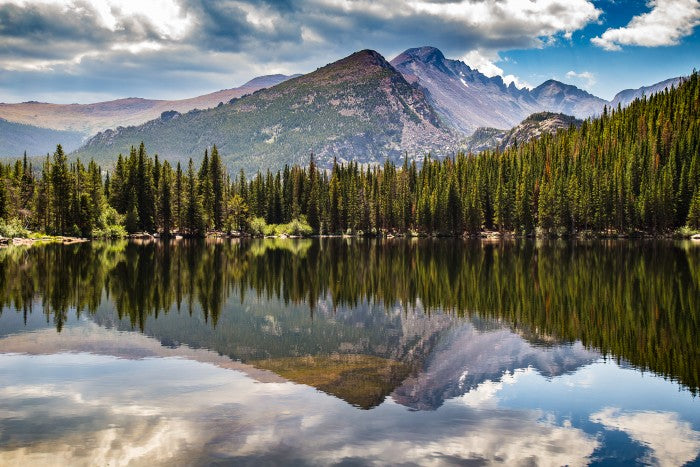

Bear Lake, Rocky Mountain National Park


Kids are born naturalists. They access the natural world by asking questions, which sometimes come in bunches. Introducing children to the outdoors can begin at any time, but why not begin early? And why not start them out in Rocky Mountain National Park, one of the country's premier outdoor wonderlands. Infants can be carried in a front pack, which can be tucked inside the jacket if it's chilly. Hike anywhere. Your kids will be enthralled by the stunning scenery and the fresh mountain air, so enthralled that he or she will fall asleep in short order. When they reach the toddler stage, children begin to more actively interact with nature. It is a time of observation, of making initial connections and stockpiling notes. It is a wonderful time to introduce them to one of the many discovery trips found around the park. A few suggestions.


  • Explore the edges of Bear Lake while enjoying the guidebook-guided trail tour that explains the area's natural and human history. Water holds an amazing variety of plant and animal life that will pique a child's curiosity.

  • Discover Rocky Mountain's amazing array of wildlife. At particular times during the summer (ask a park ranger), the bighorn sheep come down to Sheep Lakes. Kids especially enjoy watching them cross the road after the lambs are born.

  • Find a ponderosa pine forest and watch for Abert's squirrels. Their dark color and busy activities catch a toddler's eye for contrast and movement. Kids that are a bit older develop a more complex understanding of the world around them. While some children might enjoy expending energy hiking along a trail, most seem happiest thoroughly exploring a smaller area. On any hike with three to five year olds, it's a good idea to include a magnifying glass in the backpack. Textures of trees, plants, bugs and rocks are exciting close-up. In the early summer, enjoy the amazing floral colors found along the trail to Cub Lake.

  • Have the youngsters keep an eye out for hummingbirds that may be visiting the flowers. Watch for beaver along the way in the Cub Creek drainage. Beaver dams are easy to spot in this area and stream banks are ideal places to look for animal tracks.

  • The park has a "Rocky's Junior Ranger Program" for children in kindergarten through eighth grade. Emphasis is placed on park preservation, flora and fauna facts, and environmental education. When kids complete the Junior Ranger booklet, they earn a badge. Check at a visitor center for information.
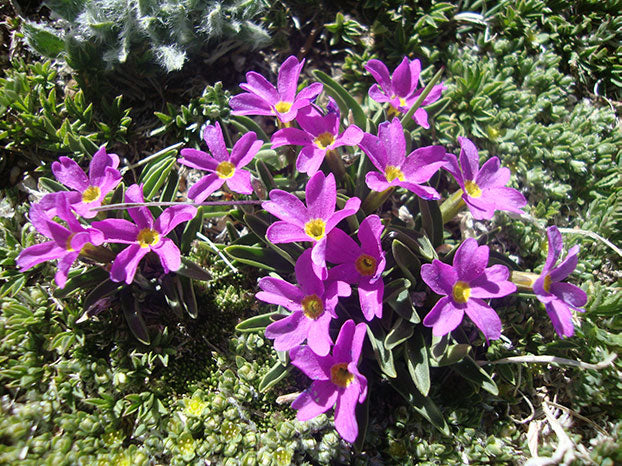

Fairy Primrose, Rocky Mountain National Park


These are but a few of the things you can do at Rocky Mountain National Park. Check with the park rangers when you arrive to see what activities are available, what wildlife might be easiest to see, or where the wildflowers are blooming. I've created three posters for Rocky Mountain National Park -- one that features a view of Moraine Park, one for Cub Lake, and one for the iconic Longs Peak.
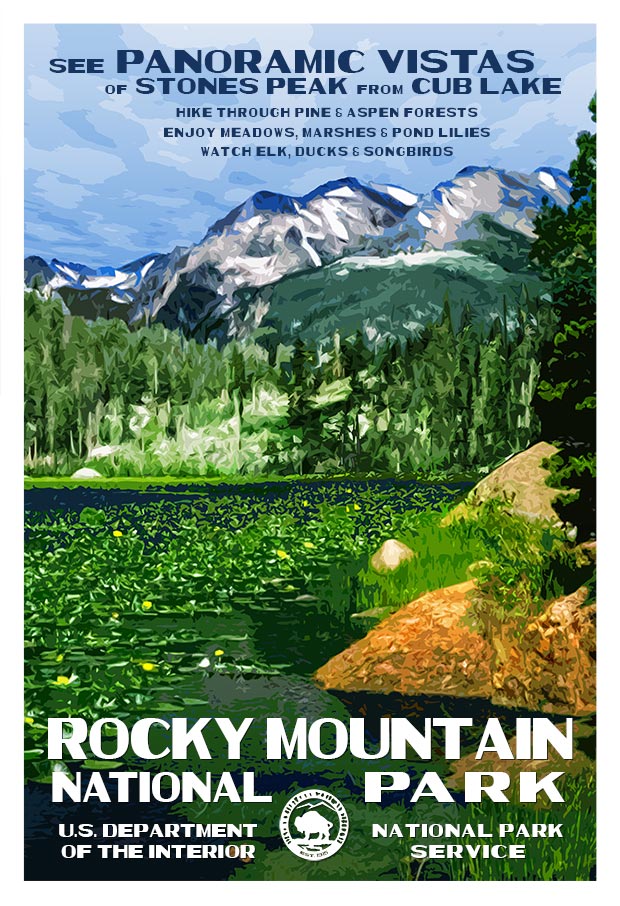


Click here to see the Rocky Mountain National Park, Cub Lake poster.


Click here to see the Rocky Mountain National Park, Moraine Park poster.


Click here to see the Rocky Mountain National Park, Longs Peak poster.


Rob Decker is a photographer and graphic artist who had the rare privilege of studying under Ansel Adams in Yosemite National Park when he was just 19 years old. Now, Rob is on a journey to explore and photograph all 61 of America's National Parks. He's creating WPA-style posters to help people celebrate their own national park adventures -- as well as encourage others to get out and explore!


Source: https://national-park-posters.com/blogs/national-park-posters/best-things-to-do-in-rocky-mountain-national-park
attachement